Motivation
Why crop diversification, and why now?
Specialty crop monocultures across the Lake Erie Grape Belt — Concord and a handful of vinifera and hybrid wine varietals — face compounding pressure from climate volatility, processor consolidation, and labor and input cost inflation. The economic case for adding complementary crops is increasingly clear, but the operational case is hard: which parts of which fields, with which crops, with what payback horizon?
March 2026 — a concrete example. Refresco, one of the major Concord grape processors serving the Lake Erie Grape Belt, abruptly canceled contracts with growers across western New York, Pennsylvania, and Ohio — after many had already invested in the 2026 season. Smaller-acreage growers who delivered only to Refresco face the steepest fall: no buyer, sunk costs, and a real possibility of mothballing vineyards to cut losses. The episode is a stark, recent illustration of the structural risk that motivates this work — that single-processor exposure on a single specialty crop can flip from steady to existential overnight.
Decision support for this question has historically meant a soils map, a yield monitor printout, and a conversation with an extension agent. That works, but it does not scale, it can’t easily integrate the full open-data toolbox of remote sensing and climate records, and it can’t cheaply re-run as new imagery arrives, prices move, or the catalog of viable crops grows.
Our hypothesis is that an agent-based workflow, built on top of well-defined APIs for farm context and crop intelligence, can give researchers and growers a faster, more auditable, and continuously-updateable starting point for these conversations — without replacing the expert review and on-farm trials that ultimately validate any recommendation.
The two research questions the system aims to answer:
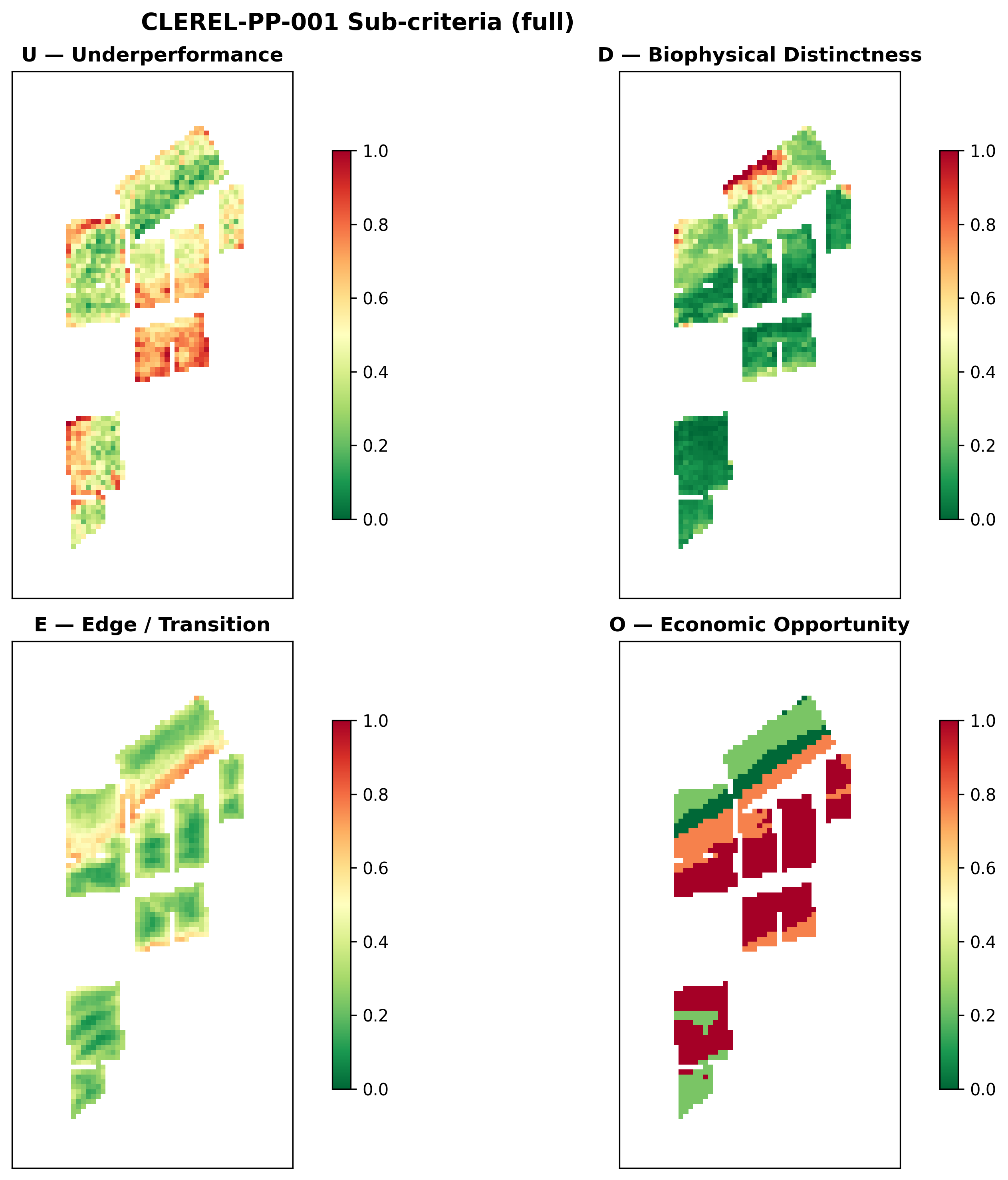
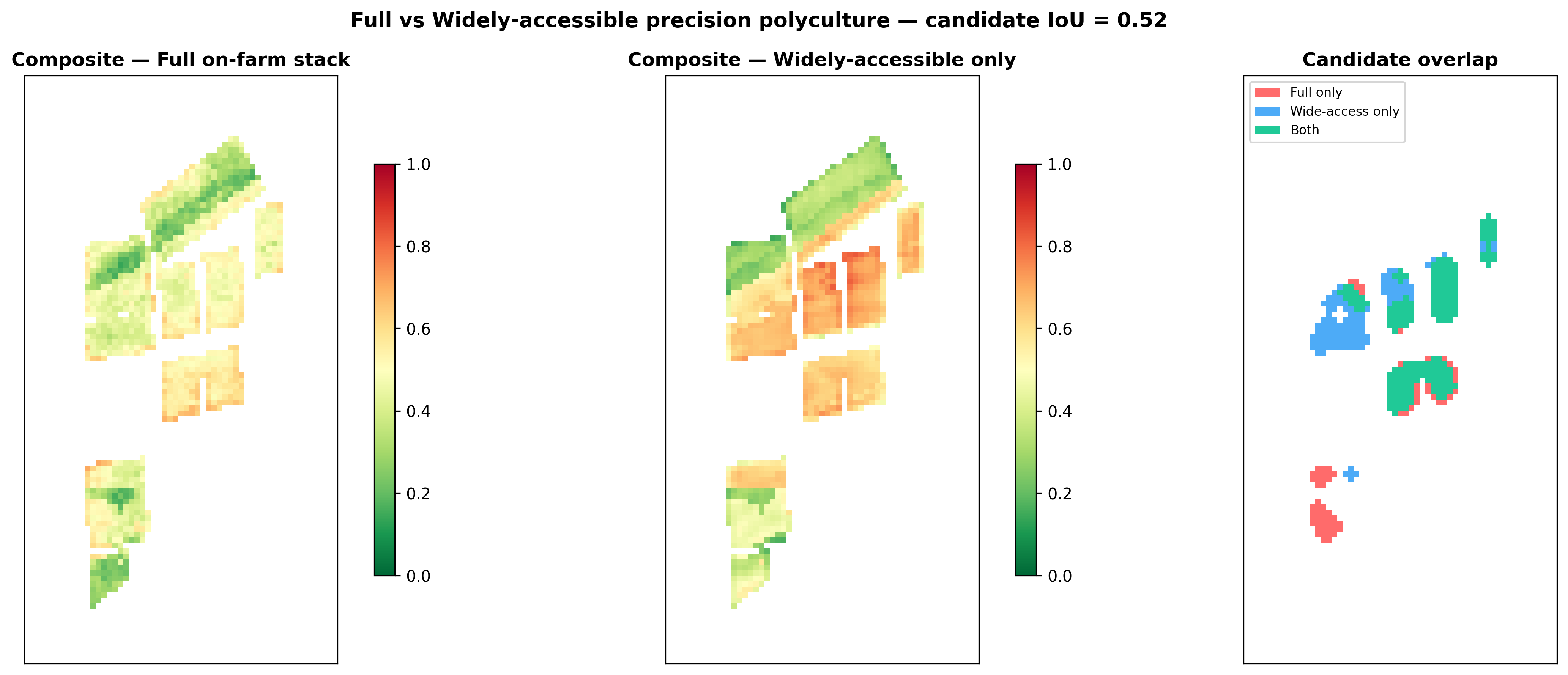
1. Identify candidate geographies — the sub-field regions where diversification is most justified by underperformance, biophysical distinctness, edge/transition character, and economic opportunity.
2. Identify candidate crops — the audited catalog entries that match each region’s soil, drainage, climate, and market context, ranked for fit and economic upside.
 CLEREL